





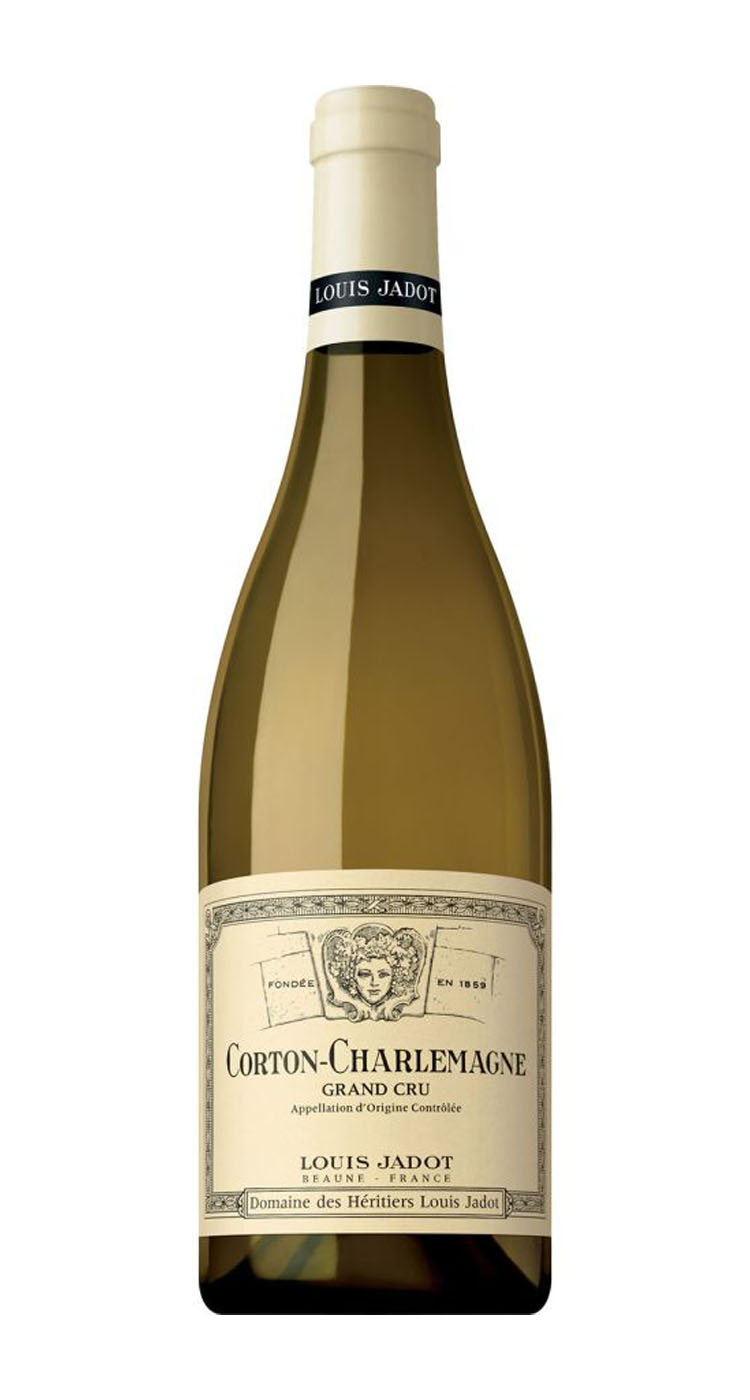

Louis Jadot Corton-Charlemagne Grand Cru AOC 2023
319000 ₸
/ pcs.The wine is pale yellow in color.
Strict and concise, with delicate hints of apple and moist limestone.
Well-balanced, elegant, with refined acidity, tones of white fruits, and a lingering finish.
The wine pairs beautifully with shellfish, lobster, foie gras, fish, and aged cheeses.
Specifications
- Country: France
- Region: Burgundy, Côte de Beaune
- Manufacturer: Louis Jadot
- Grape variety: Chardonnay: 100%
- Wine: White, dry
- Alc: 13.5%
- Serving temperature: 10–12 °C
- Type of drink: Wine
Interesting facts
The Corton-Charlemagne vineyards are located in two villages in the northern part of Côte de Beaune — Aloxe Corton and Pernand Vergelesses. Aloxe Corton is a famous area, more than half of its area from east to south and southwest is covered with Grand Cru plots. At the top of the hill lies the Grand Cru Corton-Charlemagne, named after the French emperor Charles. It is said that he owned this land 1300 years ago. Exceptional white wines of Burgundy are born here. The Corton-Charlemagne vineyards with Chardonnay vines are the oldest in Louis Jadot's collection, as the Jadot family has owned them since the 19th century. The Corton-Charlemagne Grand Cru wine is recognized as one of the best white wines in the world. The fermentation of the wine takes place in new oak barrels, after which it is aged in these barrels for 8-10 months. The wine has excellent aging potential — up to 20 years.
About the Manufacturer
Louis Henry Denis Jadot founded the Louis Jadot House in 1859. However, the history of this house dates back to 1826 when the Jadot family purchased vineyards — Clos de Ursul, Bon Premier Cru. The merchant house under Louis Jadot's management quickly expanded with a focus on the northern European markets — a territory well known to Louis, as his family came from Belgium. His son, Louis Jean-Baptiste, took over the company in 1900 and began expanding operations by purchasing numerous vineyards, including Corton-Charlemagne and Chevalier-Montrachet Le Demoiselle. The next generation, under Louis Auguste Jadot, began developing new export markets, primarily in England and the USA, with the help of Rudy Kopf, founder of Kobrand Corporation. In 1954, André Gage joined the company as Louis Auguste Jadot's deputy, and in 1962, after Louis's death, André became the director of the Jadot House. In 1970, Gage hired young winemaker Jacques Lardière as his assistant, and in 1984, André Gage's son, Pierre-Henri, joined the company. In 1985, to secure the company's future, Madame Jadot decided to sell the company to the Kopf family, American importers of the Jadot House. In 1992, Pierre-Henri Gage became president of the Louis Jadot House. Today, the Jadot House owns 154 hectares of beautiful vineyards in Burgundy — from Côte d’Or to Mâcon and Beaujolais. Thanks to the highest quality of wine, the wines of Louis Jadot have an excellent reputation both in France and worldwide — among sommeliers, restaurateurs, importers, and wine lovers. From the very beginning, the Louis Jadot House has paid attention to the importance of each Burgundy appellation — from Grand Cru to regional wines. The terroir of Burgundy is diverse — it is a mosaic of plots, each with its individual character deserving respect, and the task of the Jadot house is to allow the wines to express these subtle differences and convey the true spirit of Burgundy, as this great terroir can simultaneously take pride in its past and look optimistically to the future. In Burgundy, wines have always been made from a single variety: Pinot Noir for reds, Chardonnay for whites, and Gamay for Beaujolais. The grapes are hand-harvested and undergo the strictest selection. To create wines that celebrate the terroir, Jacques Lardière works with a team of experienced professionals, together ensuring the success and future of the Jadot House. Since 1995, the company has its own cooperage, Cadus, where barrels are made from oak sourced from the best forests in France. All wines from the Louis Jadot House have the same labels — featuring the image of Bacchus's head (in ancient mythology, Bacchus is the god of wine), a decorative frieze, and a special shade of yellow, making them easily recognizable. These labels are a sign of commitment to quality, regardless of whether it is a simple Burgundy wine or a great Grand Cru.
Similar products

286400 ₸
279400 ₸
.jpg)
330000 ₸
304000 ₸
297000 ₸