








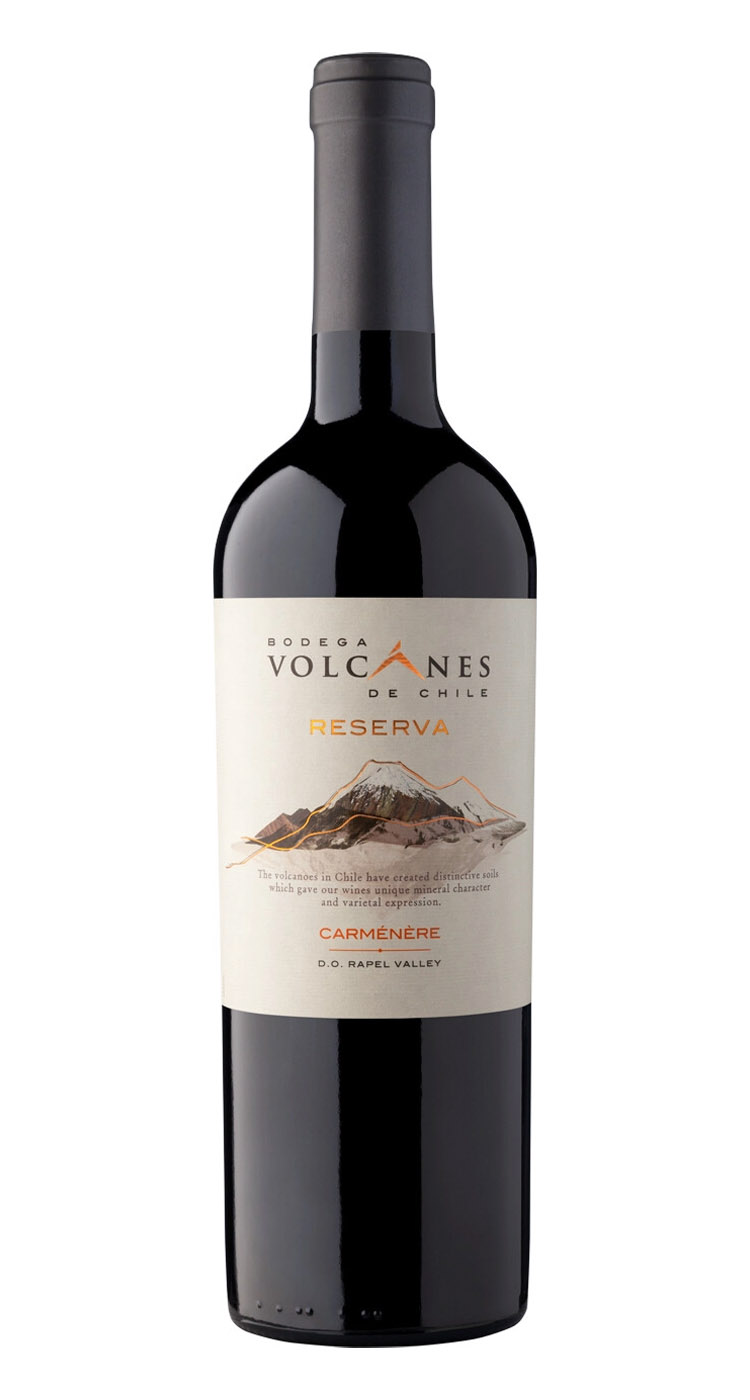

Bodega Volcanes Reserva Carmenere Rapel Valley DO
7800 ₸
/ pcs.Deep violet-red color.
A pleasant mix of ripe berry notes complemented by hints of dark chocolate, herbs, tobacco, olives, and white pepper.
Smooth, bold, well-structured, with a silky texture, soft tannins, delightful minerality, typical notes of red plum, red bell pepper, ripe tomato, light berry nuances, and a persistent finish.
The wine pairs perfectly with various casseroles, red meats, stews, pork, and sausages. Additionally, it goes well with typical Chilean corn dishes (pastel de choclo and humitas) and bean dishes (porotos granados), as well as meat-filled pancakes.
Specifications
- Country: Chile
- Region: Central Valley, Rapel Valley
- Manufacturer: Bodega Volcanes
- Grape variety: Carmenere: 85%, Cabernet Sauvignon: 15%
- Wine: Red, dry
- Alc: 14%
- Serving temperature: 16–18 °C
- Type of drink: Wine
Interesting facts
Bodega Volcanes, "Reserva" Carmenere is a dry red wine made from Carmenere grapes with a small addition of Cabernet Sauvignon, showcasing a bold character. Carmenere contributes spicy notes, softness, body, and velvety tannins that harmonize perfectly with the fruity nuances and vibrant strength of Cabernet Sauvignon. This achieves an ideal balance, elegance, and good aging potential for the finished wine. The grapes are grown on volcanic soils in the Rapel Valley. The clayey soils are highly mineralized, moderately fertile, and well-drained. A significant difference in daily temperatures promotes slower ripening of the grapes and the achievement of optimal tannin levels. The grapes are hand-harvested and carefully transported to the winery, where they undergo strict selection. After destemming and pressing, cold maceration is conducted for 4 days at a temperature of 6-8 °C to achieve a more intense color and concentration of aromas. Alcoholic fermentation using selected yeasts occurs at a temperature not exceeding 28 °C with regular pumping over. Post-maceration is then carried out to improve structure and polymerize tannins. Overall, vinification in stainless steel tanks takes from 22 to 25 days. Malolactic fermentation and aging on the lees for 8-9 months occur in French and American oak barrels. The final blend is then created.
About the Manufacturer
The goal of Bodega Volcanes is to create original and unique wines that maximally reflect the unique minerality of each site where the grapes are grown. Chile has over 2900 volcanoes, and the vineyards of Bodega Volcanes are located in various valleys across the country with deeper subsoils rich in volcanic inclusions that help the vines withstand high air temperatures, retain more moisture, and provide excellent drainage. For the company, this "volcanic" character is an attribute that adds brightness and richness to the wines, greater complexity in taste and aroma. The philosophy of Bodega Volcanes is to produce wines that fully reflect the terroir and demonstrate the purity of grape varieties without excessive use of oak barrels for aging. The Rapel vineyard, covering 25 hectares, is located in the Cachapoal province about 40 km from Rengo. Its soils are clayey, with good content of silt, clay, and rocky materials, most of which are volcanic. Here, the company grows the following grape varieties: Grenache, Carmenere, Cabernet Sauvignon, Syrah, and Petit Syrah. Nearby are the San Jose and Tinguiririca volcanoes. The Maule vineyard, covering 33 hectares, is located 400 km south of Santiago and east of the coastal mountain range. Its topography is formed by the tectonic movement of the Nazca and South American lithospheric plates. The soils here are formed from a volcanic arc that is over 300 million years old. Magma, subjected to cold temperatures, has turned into granite, which over time has increasingly been exposed on the soil surface. The vineyard soils are red granite with a high iron content. Here, the company grows the following grape varieties: Syrah, Carignan, Grenache, Carmenere, Cabernet Sauvignon, and Mourvedre. Nearby are the Planchon-Peteroa, Descabesado-Grande, and Quisapu volcanoes, also known as Cerro Azul (Spanish for "blue hill"). The Malalco vineyard is not owned by Bodega Volcanes. It belongs to a local farmer with whom the company has a long-term contract. The soils here are rich in volcanic tuff due to the relative proximity of the Lonquimay volcano, which formed in 1990. Only Chardonnay grapes are grown in this vineyard. Nearby are the Antuco and Tolhuaca volcanoes.
Similar products
6500 ₸

8600 ₸
8600 ₸
.jpg)
6500 ₸

7800 ₸