








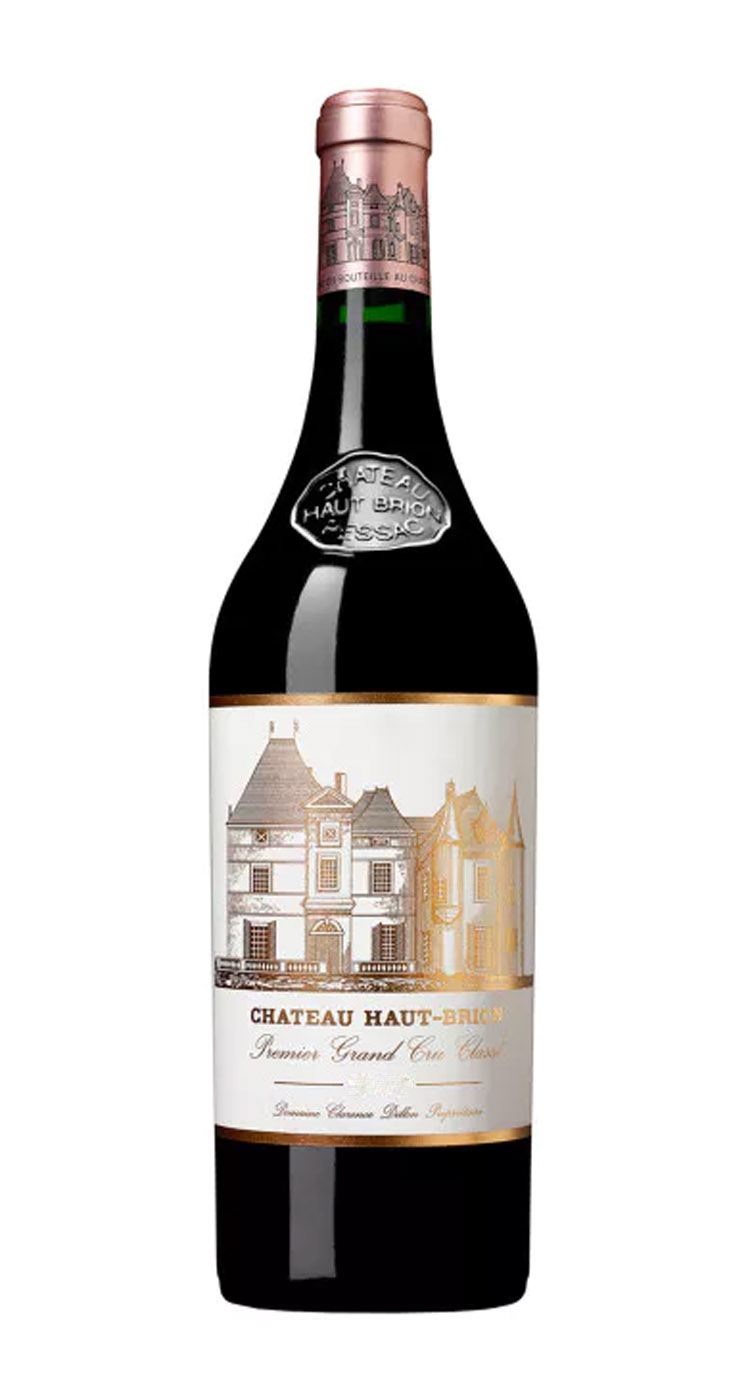

Chateau Haut-Brion Rouge Pessac-Leognan AOC 1-er Grand Cru Classe 2021
700000 ₸
/ pcs.The color is dark, bright red.
The aroma is complex, with fresh and spicy notes at the same time. It reveals tones of forest berries, noble wood, ripe cherry, delicate floral nuances, hints of candied purple fruits, and sweet tobacco — a very enticing bouquet.
The taste is full-bodied, abundant, and meaty, rich and layered, with an enveloping fruity core surrounded by many sweet, powdery tannins. Despite having the same high alcohol level as in 2019, its grainier tannin profile softens the fruity sweetness of the harvest and gives it more classic proportions and structure. The aftertaste is very pleasant and persistent.
Pairs wonderfully with cheeses, game, roasts, grilled meats, and other meat dishes.
Specifications
- Country: France
- Region: Bordeaux
- Manufacturer: Chateau Haut-Brion
- Grape variety: Merlot, Cabernet Sauvignon, Cabernet Franc
- Wine: Red, dry
- Alc: 15%
- Serving temperature: 16-18 °C
- Type of drink: Wine
Interesting facts
Chateau Haut-Brion — an exquisite red dry wine, elegant and complex, very mineral and of rare complexity, made from Merlot, Cabernet Sauvignon, and Cabernet Franc grapes. At the winery, the grapes undergo destemming and crushing, and then are placed in a special double tank for fermentation, where the upper part undergoes fermentation, and the lower part undergoes malolactic fermentation, with the movement of the wine occurring by gravity. The wine is aged for 18 to 22 months in oak barrels, 77.3% of which were new in 2020. Experts recommend consuming the 2021 vintage until 2066.
About the Manufacturer
Chateau Haut-Brion has many accolades — it produces the oldest wine in Bordeaux, is part of the famous classification of Bordeaux wines, is renowned for inventing a new style of wine in the 17th century, and represents one of the most luxurious wine brands in the world. The red wine of Chateau Haut-Brion embodies a five-century tradition of winemaking and plays a major role in the history of wine worldwide. According to ancient maps and other written sources, Chateau Haut-Brion existed as early as the 14th century, making it the oldest wine estate in Bordeaux. The estate has changed owners many times, being sold and seized for debts. The only constant until the 19th century was the high quality of the wines from the estate, which, due to their high reputation, were the only ones from Médoc included in the top five First Growths in the 1855 classification, standing at the highest level alongside Chateau Margaux, Chateau Lafite, and Chateau Latour. Historical documents indicate that this wine was served at the table of King Charles II of England in 1660. The 19th and early 20th centuries were difficult for the estate due to severe damage to the vineyards from oidium (powdery mildew) and phylloxera, the World Wars, economic depression, and the severe frost of 1956. But the estate not only survived and endured; it continued its glorious path, opening a new chapter in its history in 1935. It was then that the estate was acquired by Clarence Dillon, an American financier and wine lover, whose mother was French. Today, Chateau Haut-Brion is managed by Clarence Dillon's great-grandson, the son of Joan Dillon and Prince Charles of Luxembourg, Prince Robert. He began managing the estate in 1992 and was appointed chief manager of the Chateau in 2002. In 2008, he became president of the Clarence Dillon Domain. The estate's vineyards are located in the Pessac region, just a few miles from the center of Bordeaux. The soils of the vineyards, covering 51 hectares, are mainly gravelly, consisting of small stones, including quartz — this rock makes the taste of Chateau Haut-Brion remarkably rich. The uniqueness of the terroir is expressed in the wines through an unusual bouquet with smokiness, combining aromas of Havana cigars, chocolate, and cedar. This aroma persists throughout the tasting and in the long aftertaste, indicating the extraordinarily high quality of the wine. The dominant grape varieties are international red varieties — Cabernet Franc, Cabernet Sauvignon, and Merlot. They occupy about 48 hectares. However, there is a small plot of white varieties and another small vineyard of 2 hectares, where atypical Bordeaux varieties Malbec, Sangiovese, and even Pinot Noir are grown.
Similar products
827700 ₸
680000 ₸

592800 ₸
.jpg)
641300 ₸
660000 ₸
780000 ₸
600000 ₸