









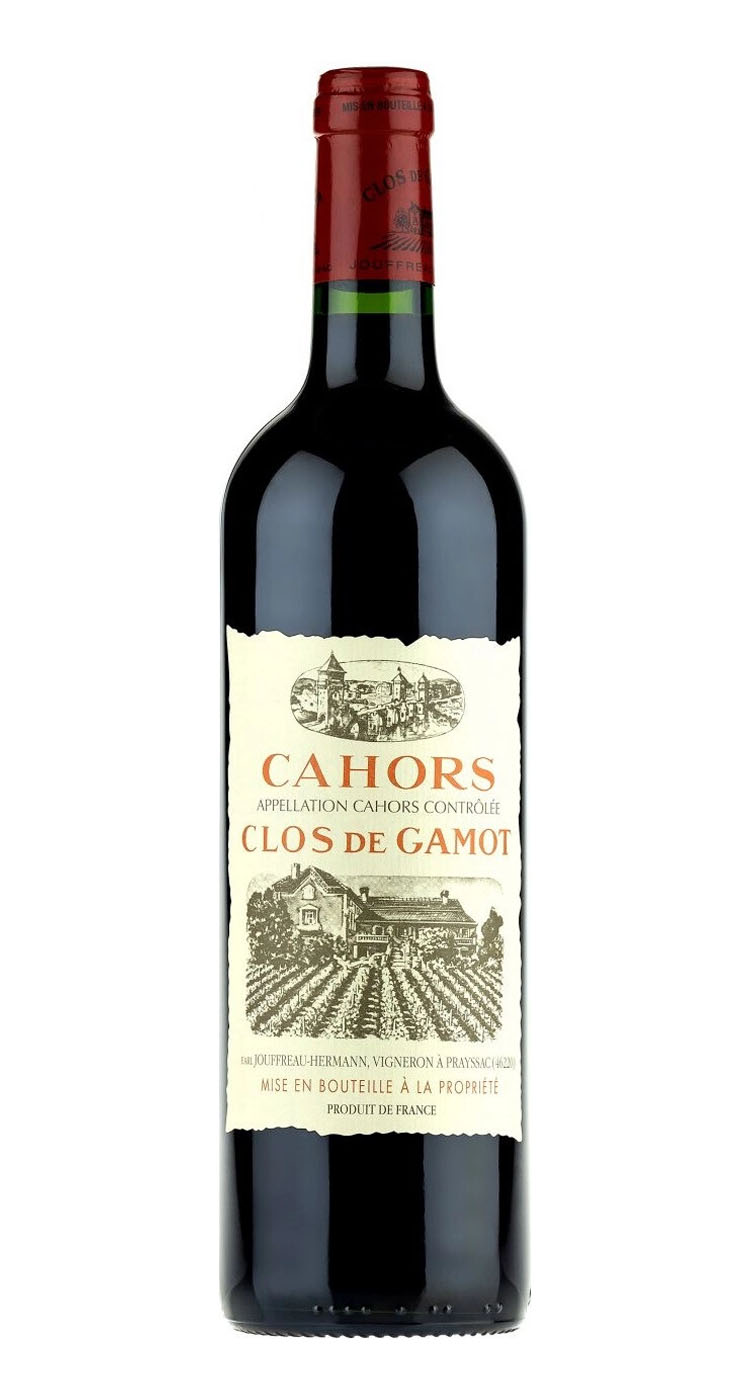

Jouffreau-Hermann Clos de Gamot Cahors AOC
15600 ₸
/ pcs.The wine has a deep red-purple color.
In the expressive aroma of the wine, floral notes of violet harmoniously intertwine with hints of black fruits and cherry.
The wine has a full, elegant taste, perfectly balanced, with fruity-floral accents, fresh, crisp acidity, rounded tannins, and a long, dry, spicy finish.
The wine is recommended to be enjoyed with various red meat dishes and aged cheeses.
Specifications
- Country: France
- Region: South-West France, Cahors
- Manufacturer: Jouffreau-Hermann
- Grape variety: Malbec: 100%
- Wine: Red, dry
- Alc: 14.5%
- Serving temperature: 16-18°C
- Type of drink: Wine
Interesting facts
"Clos de Gamot", Cahors AOC is an exquisite red dry wine made exclusively from Malbec grapes, which are grown in the "Clos de Gamot" vineyard, the oldest vineyard of the company. It covers an area of 25 hectares, with clay-siliceous soils, interspersed with gravel and flint. Some vines are up to 120 years old, planted immediately after the phylloxera epidemic in 1885, and still produce very high-quality yields, but in very limited quantities. Other vines range from 40 to 70 years old, and their yield is also limited. All vineyard work is done manually without the use of herbicides. The hand-harvested grapes from each plot are vinified separately. Maceration lasts about 21 days. Periodic tastings allow for finding the right time to stop maceration. Regular pumping of the must allows for gentle extraction. The wine is aged in large barrels for 18-24 months.
About the Manufacturer
Jouffreau-Hermann is the winery of the Jouffreau family since 1610, when the first Jouffreau built a house among the vineyards, which still serves as a reliable refuge for their descendants. For centuries, the family worked on the "Clos de Gamot" vineyard until disaster struck in 1880 — the phylloxera epidemic, which destroyed much of the vineyard. In the winters of 1883 and 1884, Guillaume Jouffreau attempted to graft the last Malbec shoots onto another vine. He succeeded in saving not only his vineyard but the entire Cahors region. These centuries-old vines still produce small yields of remarkable concentration, strength, and richness.
Similar products
13700 ₸
16400 ₸
17300 ₸

18200 ₸
16500 ₸
13300 ₸
12700 ₸
12700 ₸
16000 ₸
17600 ₸