








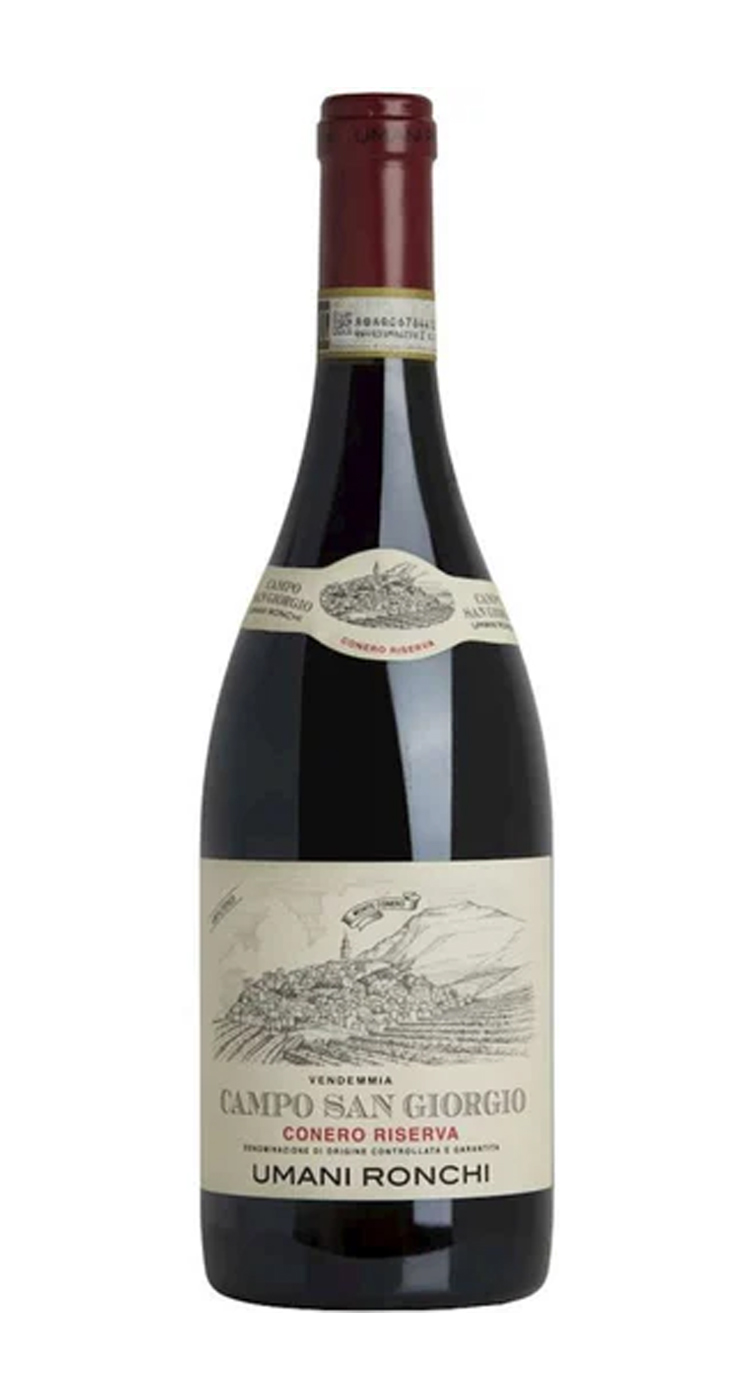

Umani Ronchi Campo San Giorgio Conero Riserva DOCG
46000 ₸
/ pcs.The wine has a ruby-red color with purple highlights.
The wine attracts with an exquisite, multifaceted aroma woven from notes of cherry, blackberry, violet flowers, spices, balsamic, and iron.
The taste of the wine is round, rich, with a silky texture, a fruity core, and pleasant tannins in a persistent finish.
The wine pairs beautifully with roasted and braised meats, spicy meat dishes, lamb chops, and kebabs. It is served with pasta with sun-dried tomatoes, olives, aged, spicy, or goat cheeses.
Specifications
- Country: Italy
- Region: Marche, Rosso Conero
- Manufacturer: Umani Ronchi
- Grape variety: Montepulciano: 100%
- Wine: Red, dry
- Alc: 13.5%
- Serving temperature: 16–18 °C
- Type of drink: Wine
Interesting facts
Umani Ronchi, "Campo San Giorgio" Conero Riserva DOCG is a red dry wine, with its first vintage released in 2009. The Montepulciano grapes are grown in the "Campo San Giorgio" vineyard on deep chalky, clay, and sandy soils. The average age of the vines is 15 years. Harvesting is done by hand in small boxes, and the berries are immediately transported to the winery. Fermentation occurs at a temperature of 26-28 °C in steel tanks with natural yeasts. After malolactic fermentation, the wine is aged for 12 months in small oak barrels and then for another 6 months in large oak barrels. Before being released for sale, the wine is further aged for 8-10 months in bottles in the winery's cellars.
About the Manufacturer
The creation of the Umani Ronchi winery dates back to 1950 when Gino Umani Ronchi purchased a large piece of land on the low hills of Marche, near the village of Cupramontana. Today, the Umani Ronchi estate is owned by the Bernetti family, which now owns six vineyards covering 100 hectares in the Verdicchio dei Castelli di Jesi Classico and Rosso Conero territories. About 40 hectares of vineyards are rented in addition to the estate's main vineyards. Umani Ronchi winery is known for its traditional wines — Rosso Conero and Verdicchio, but it also conducts interesting experiments with other varieties, primarily Cabernet Sauvignon, Merlot, and Chardonnay.
Similar products

44000 ₸
52200 ₸
45000 ₸
42000 ₸
49200 ₸
44900 ₸
39000 ₸
42800 ₸