








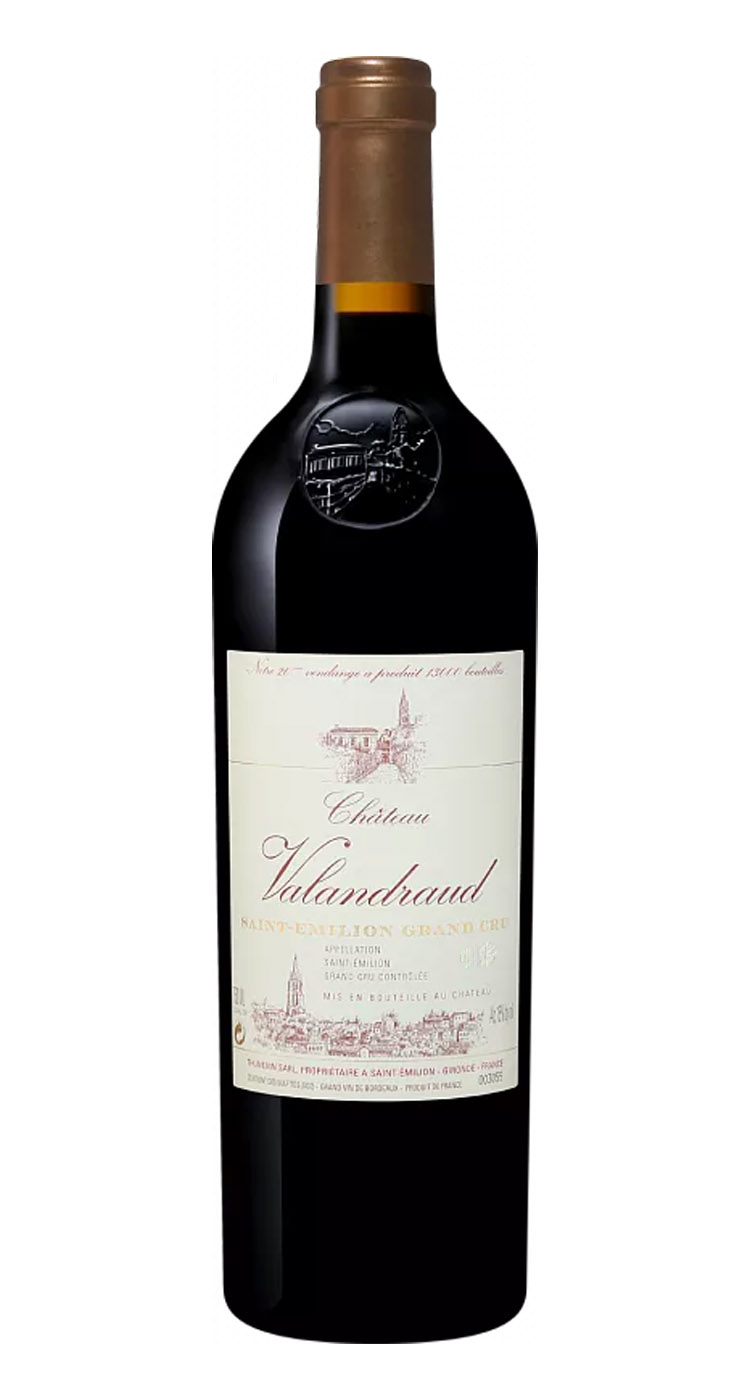

Chateau Valandraud Saint-Emilion Grand Cru AOC 2011
156000 ₸
/ pcs.The wine has an opaque inky purple color.
The beautiful aroma of the wine is filled with tones of white chocolate, cream, black currant, blackberry, camphor, charcoal, black raspberry, espresso coffee, and lively mineral nuances.
The taste of the wine is ripe, generous, energetic, youthful, with high precision, clear acidity, sweet tannins, abundant tones of ripe red and black berries, notes of oak and graphite, and a sensual finish.
The wine is recommended to be enjoyed with red meat dishes with various sauces, meat appetizers, and aged cheeses. It also pairs excellently with vegetable dishes such as roasted spiced carrots and potatoes, and with mussels.
Specifications
- Country: France
- Region: Bordeaux, Saint-Emilion
- Manufacturer: Chateau Valandraud
- Grape variety: Merlot: 65%, Cabernet Franc: 30%, Malbec: 3%, Cabernet Sauvignon: 2%
- Wine: Red, dry
- Alc: 14.5%
- Serving temperature: 16–18 °C
- Type of drink: Wine
Interesting facts
Chateau Valandraud is a wine symbolizing the modern history of winemaking, specifically the movement of so-called "garagistes". When the famous wine critic Robert Parker first tasted this wine, he was so impressed by its extraordinary flavor that he decided to visit the chateau himself. However, he did not find the vineyard at the chateau. Parker was greatly surprised and asked the estate owner, Jean-Luc Thunevin, where he produced it. "Right here, in the garage," replied the winemaker. Garage wines are a unique response to traditional Bordeaux wines. They represent wines of exceptional quality produced in minimal quantities and sold at incredibly high prices. Such "micro-producers" like Jean-Luc Thunevin often disregard traditional winemaking rules accepted in the AOC system for the uniqueness of their wines, which draws criticism from conservative connoisseurs. The grapes for "Chateau Valandraud" are hand-harvested. The selection of grapes is done twice — in the vineyard to select the ripest bunches and in the cellar before destemming. After pressing, the grape must is transferred to fermentation tanks by gravity. Vinification occurs with regular pumping over of the must. At the end of alcoholic fermentation, the wine is transferred to completely new French oak barrels for malolactic fermentation. The aging period lasts from 18 to 30 months depending on the vintage. Typically, neither fining nor filtration is performed before bottling. The peak maturity of the 2011 vintage will be from 2019 to 2034.
About the Manufacturer
Chateau Valandraud is the result of the incredible work of the married couple, Jean-Luc Thunevin and Muriel Andraud. After achieving remarkable success in wine trading, they set an ambitious goal — to own their vineyard and produce their wine. In 1989, they acquired a small plot of land of half a hectare in the plain of the Saint-Emilion region. The name of the wine combines a hint of geographical location and the maiden name of the estate's owner, Muriel. Over time, Jean-Luc and his wife purchased several more plots, and now the total area of the estate is 10 hectares. The diversity of soils allows winemakers to produce six types of wine: the famous Chateau Valandraud, Chateau Valandraud Cachet, Virgini de Valandraud, Troix de Valandraud, as well as Blanc de Valandraud No. 1 and No. 2. At every stage of production, a combination of traditional and modern winemaking techniques is applied. The grapes for all wines are hand-harvested in a unique "family" atmosphere, where a whole team of fifty people, including friends, workers, and regular customers, comes together. An interesting year in the producer's history was 2000 — when Jean-Luc Thunevin decided to protect part of his Valandraud and Clos Badon Thunevin vineyards with plastic covering to safeguard the harvest from heavy rains. As a result, the National Institute of Appellations (INAO) prohibited assigning the wine of that vintage from those plots the classification of the Saint-Emilion appellation and ruled to strip it of its original name. The winemaker did not hesitate and decided to name this wine "L`Interdit de V...D" and "L`Interdit de B...N T...N" (L`Interdit — in French, means "forbidden"). This amusing episode is characteristic of the "garagistes" movement and clearly reflects their worldview.
Similar products
125900 ₸

180000 ₸
162800 ₸

150000 ₸
137500 ₸
133900 ₸
126500 ₸
.jpg)
170000 ₸
152500 ₸
151800 ₸